
Jamyang Dhatsang: a thangka painter at Atelier Tibet
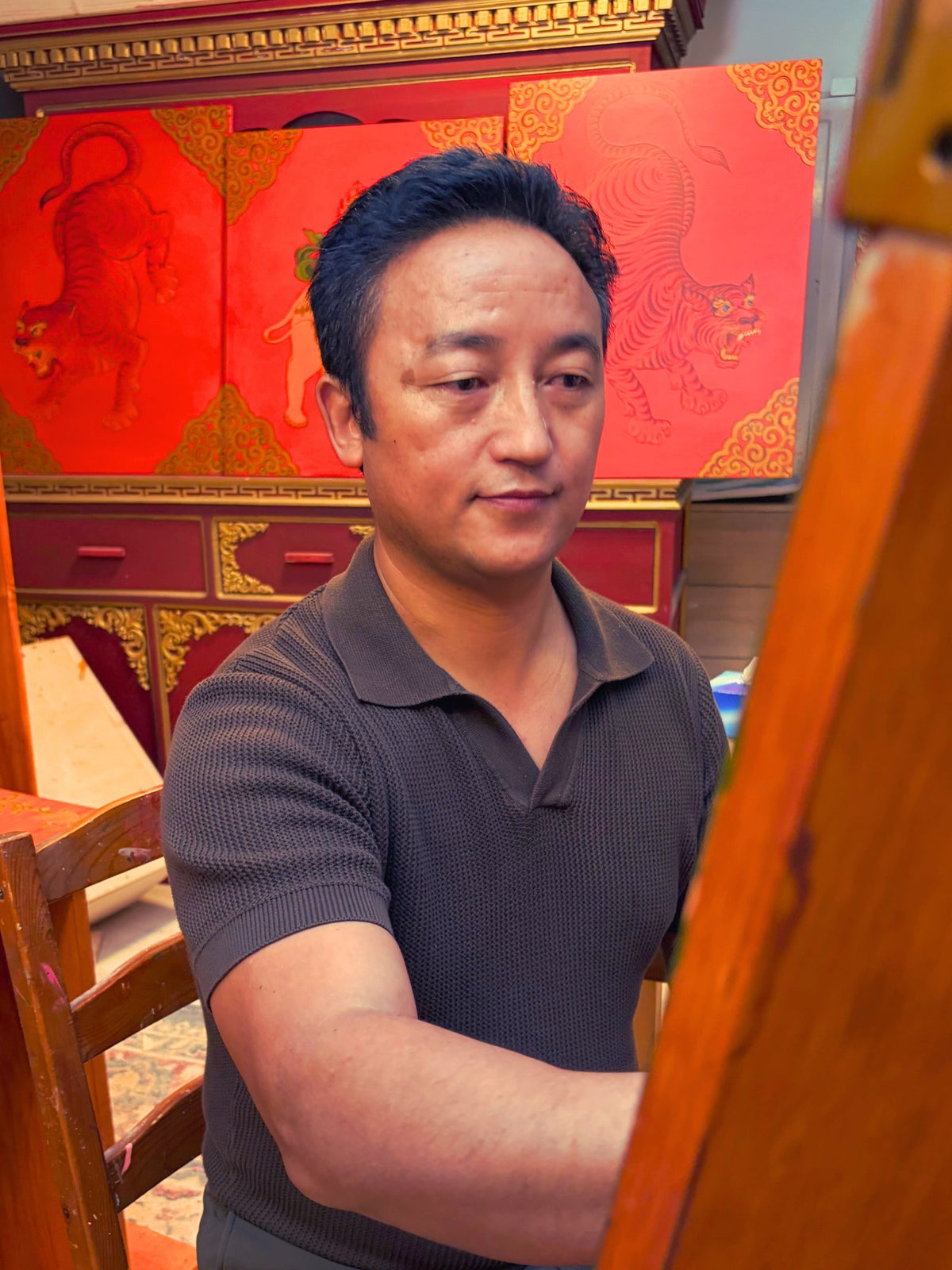
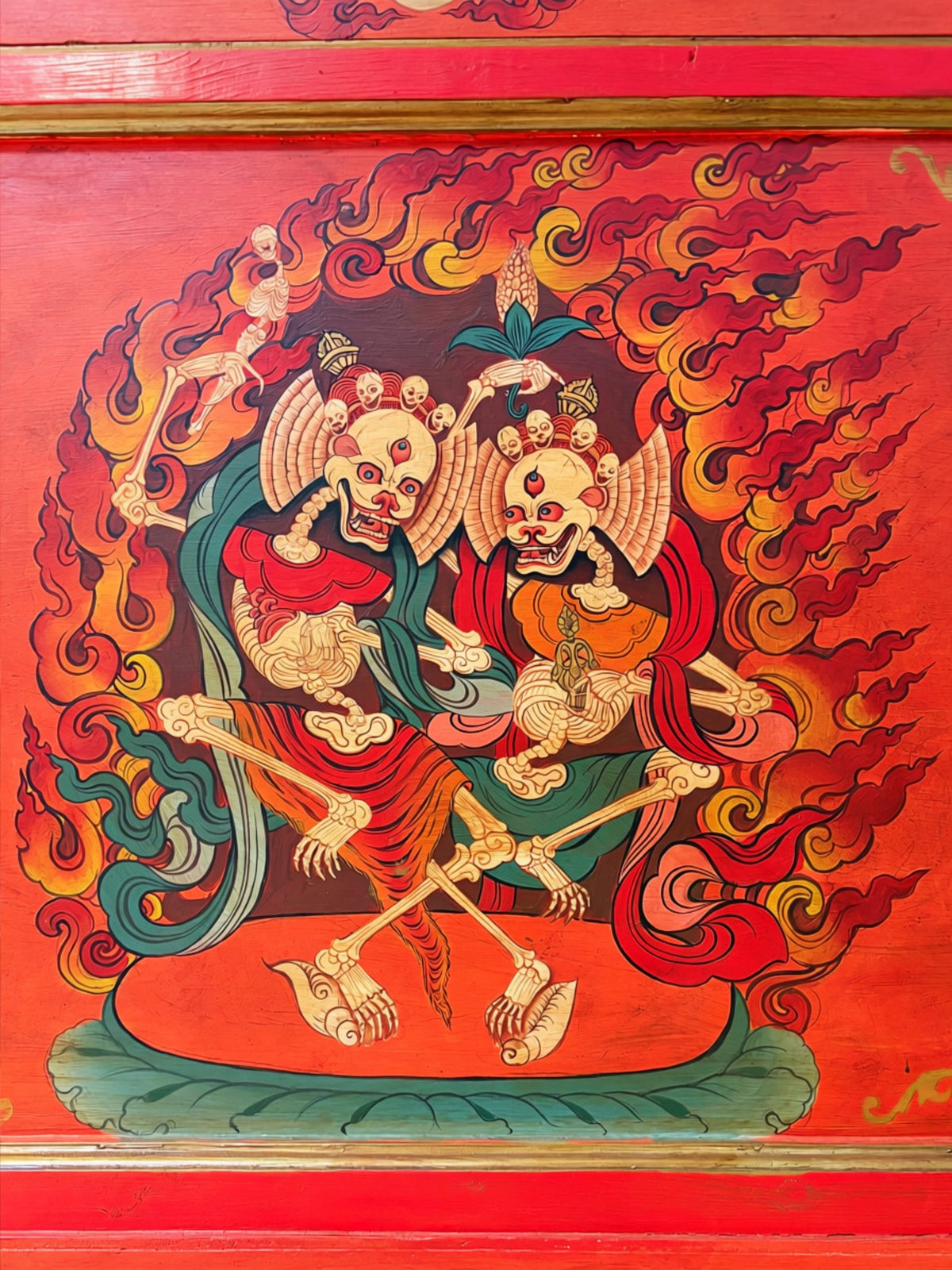
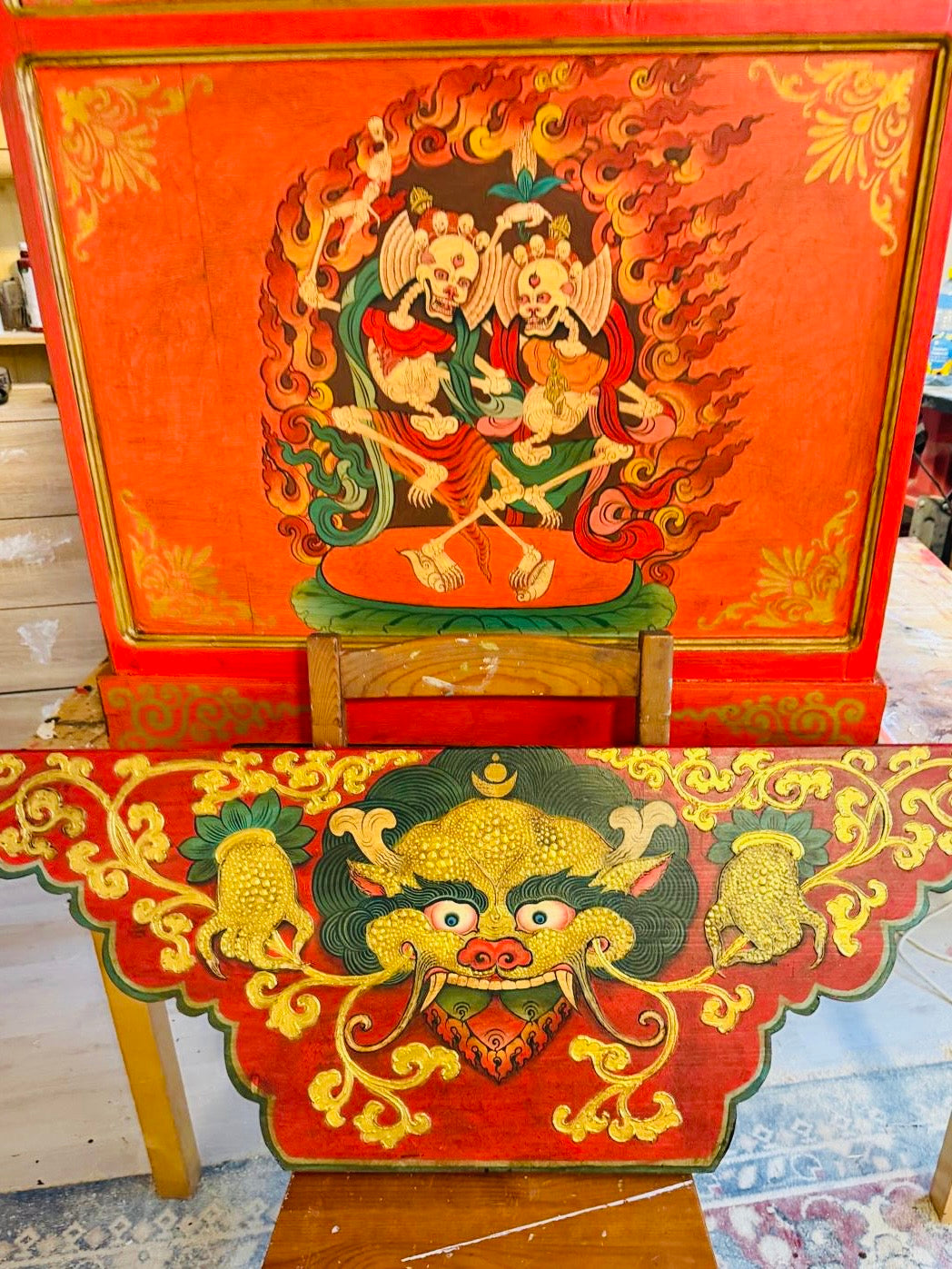
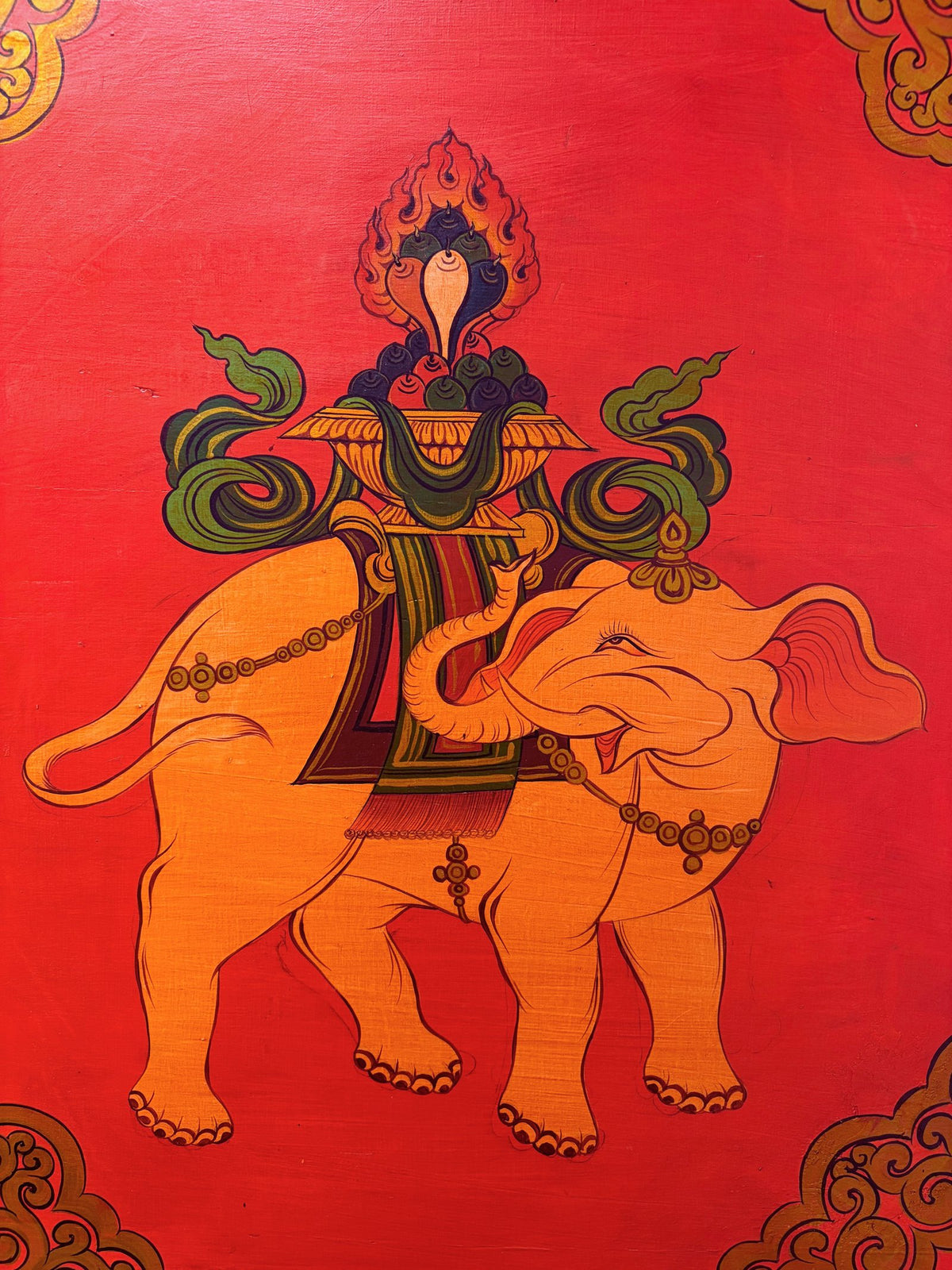
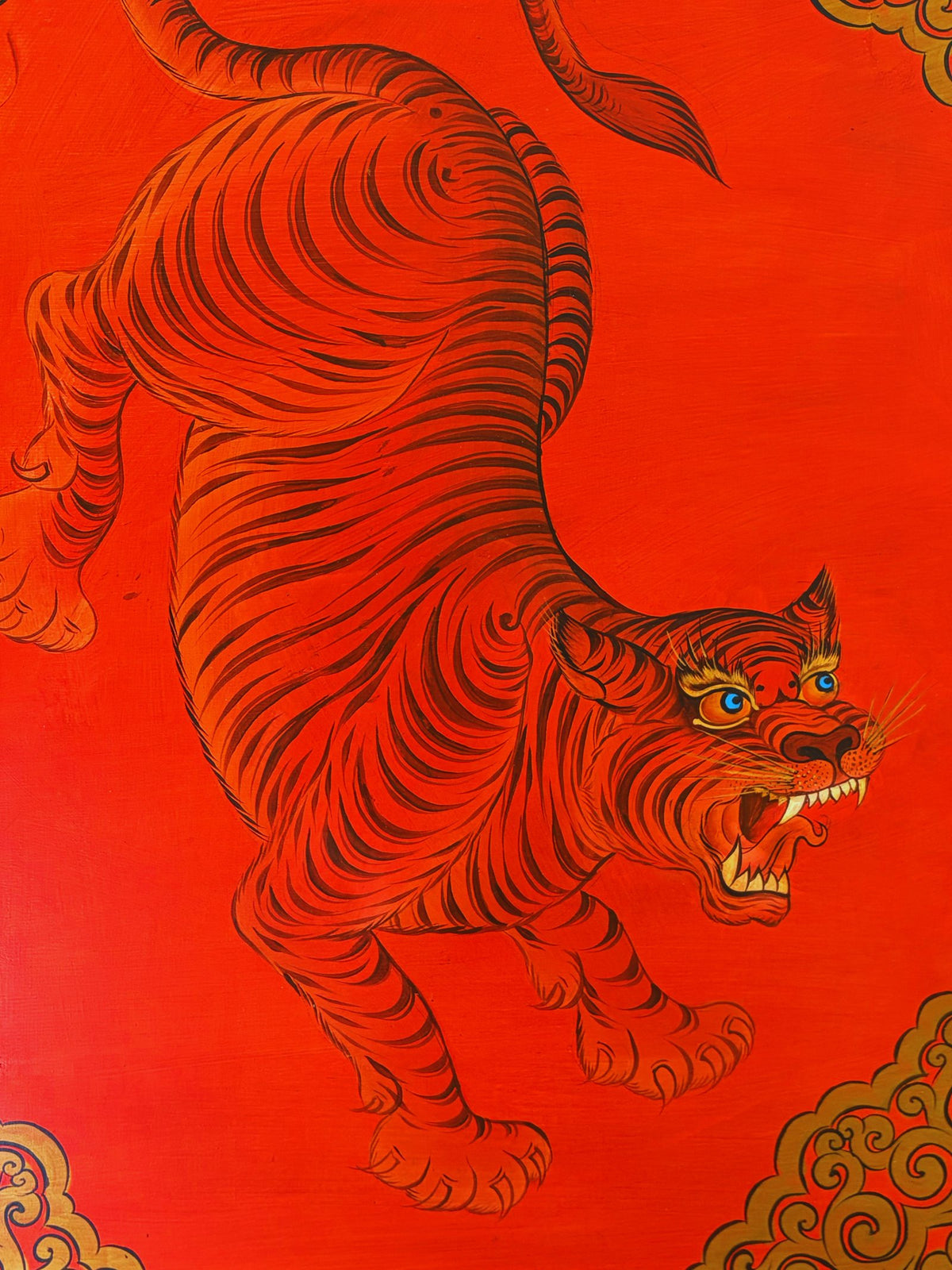
Anyone entering Atelier Tibet on Münstergasse can’t miss them: right by the entrance, two dancing skeletons in a ring of flames; behind them, two tigers on a red ground, an elephant with jewels and two wrathful Mahakalas. The furniture in the shop is painted with traditional Tibetan motifs. It was painted by Jamyang Dhatsang.
Jamyang is a trained thangka painter. He also created the Losar motifs on our shop window and our cards, most recently the Fire Horse for 2026.
At the age of twelve he was sent to a monastery in Tibet to become a thangka painter: to Dracho Monastery, not far from his home village of Zhaku. For ten years he studied this traditional art there – and with it the iconography: how each deity is depicted, in which colours, with which attributes and proportions. His teacher was Lama Wangchuk, a well-known and highly respected artist in Tibet and especially in Zhaku, skilled not only in thangka painting but also in sculpture, pottery, carpentry and stone carving.
«I feel truly honored and privileged to have had the opportunity to learn from him. His guidance, knowledge, and dedication to traditional Tibetan art have been a valuable source of inspiration for me.»
Jamyang has been living in Switzerland with his family for several years. He also happens to make excellent tattoos.
What is a thangka?
A thangka, Tibetan thang ka, is a painted scroll. Traditionally it is painted on primed cotton with pigments made from minerals and plants, and with gold for outlines and highlights. The finished painting is mounted in brocade and can be rolled up – so thangkas could be carried along and hung in different places.
A thangka is not a free work of art in the Western sense. It serves teaching and meditation, and what it shows follows fixed rules. For every figure there is a grid that sets the proportions. Colour, posture, hand gestures and attributes are fixed as well. The art lies not in invention but in precision and in the refinement of the execution.
This knowledge is passed on from teacher to student over many years. It begins with drawing and measuring the figures; colour and gold come only later.
The motifs in the shop
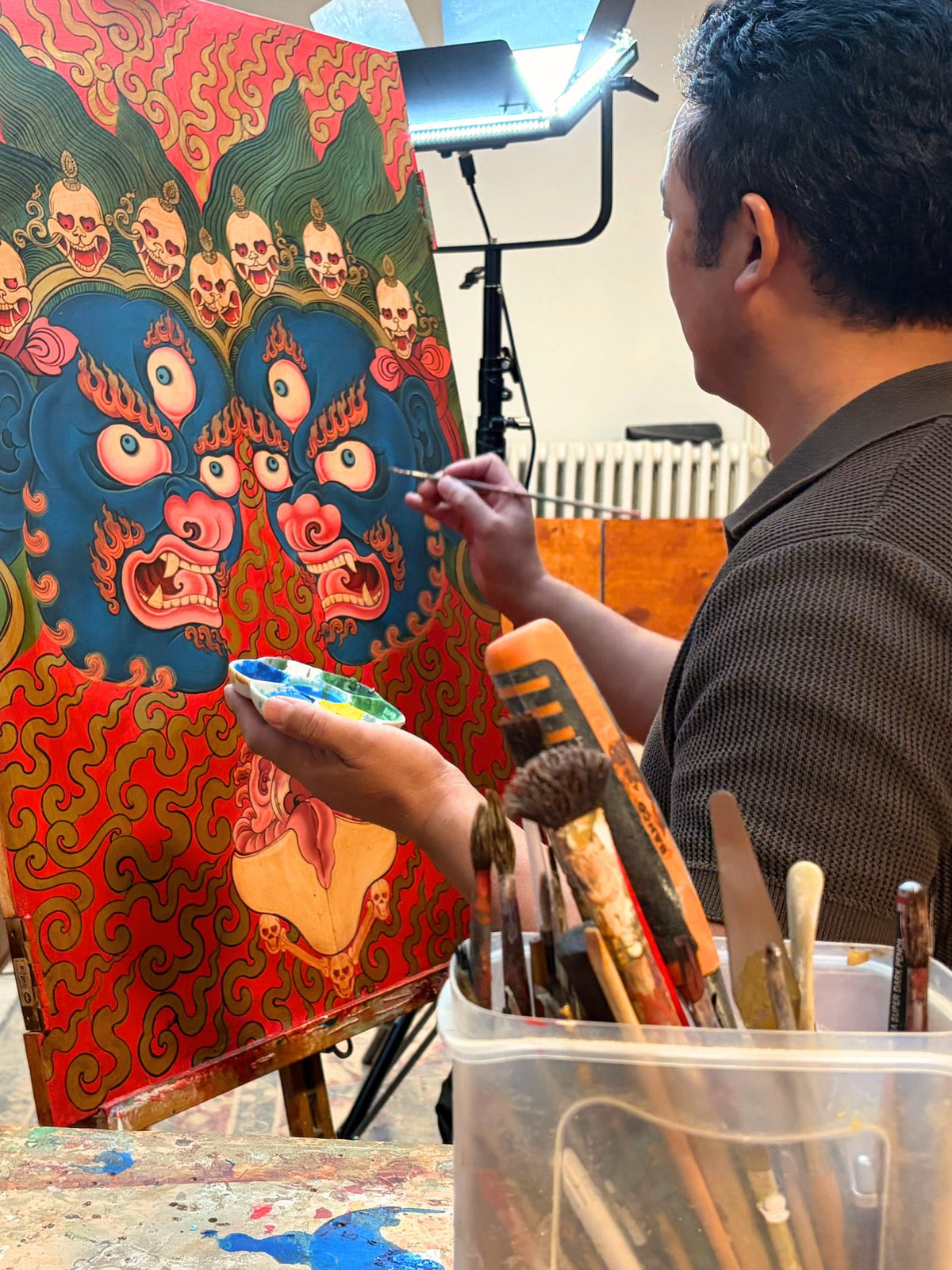
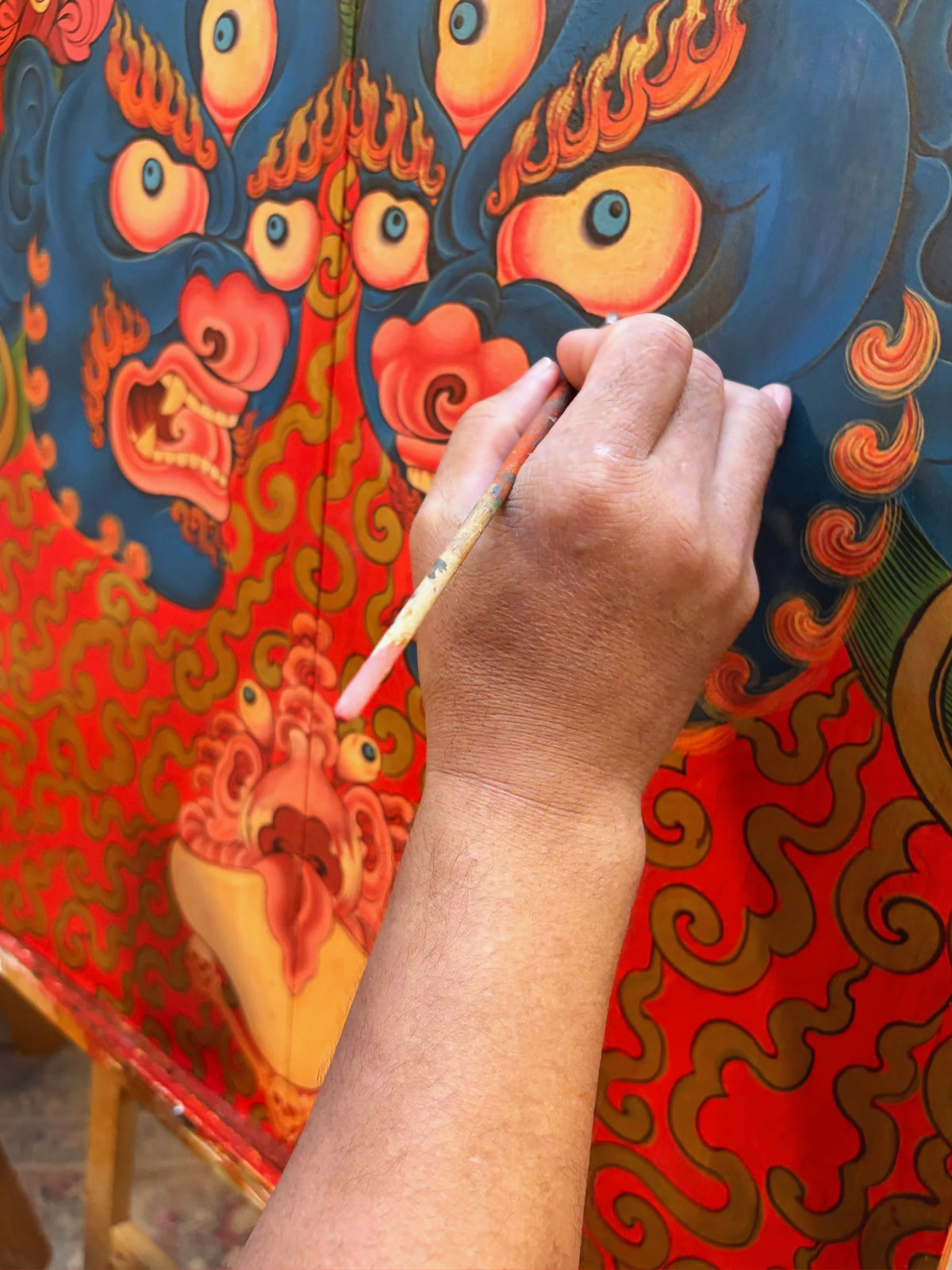
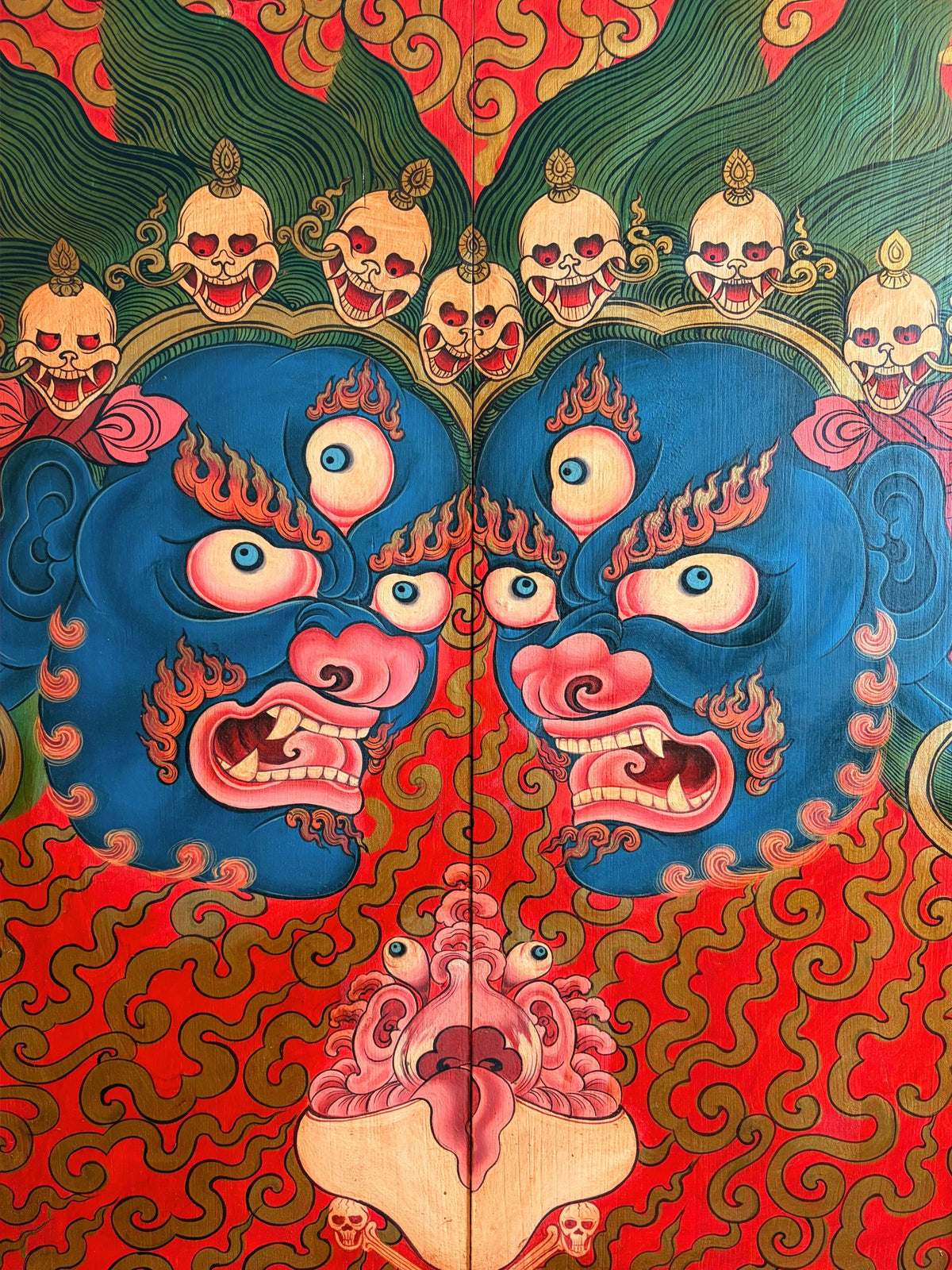
The largest work spans two cupboard doors: Mahakala, a wrathful protector deity, blue, with three eyes, flaming eyebrows and a crown of skulls. Wrathful deities look menacing at first glance. In Tibetan iconography they are protectors – their wrath is directed against obstacles, not against the viewer.
The tiger is a familiar motif in Tibetan art, on carpets as well as on furniture. It stands for strength and protection.
The elephant carries a bowl of flaming jewels. As the “precious elephant” it is one of the seven treasures of a universal ruler.
The two dancing skeletons are the Citipati, Tibetan dur khrod bdag po, the lords of the charnel ground. They are a reminder of impermanence – a motif that also appears in the masked dances of the monasteries.
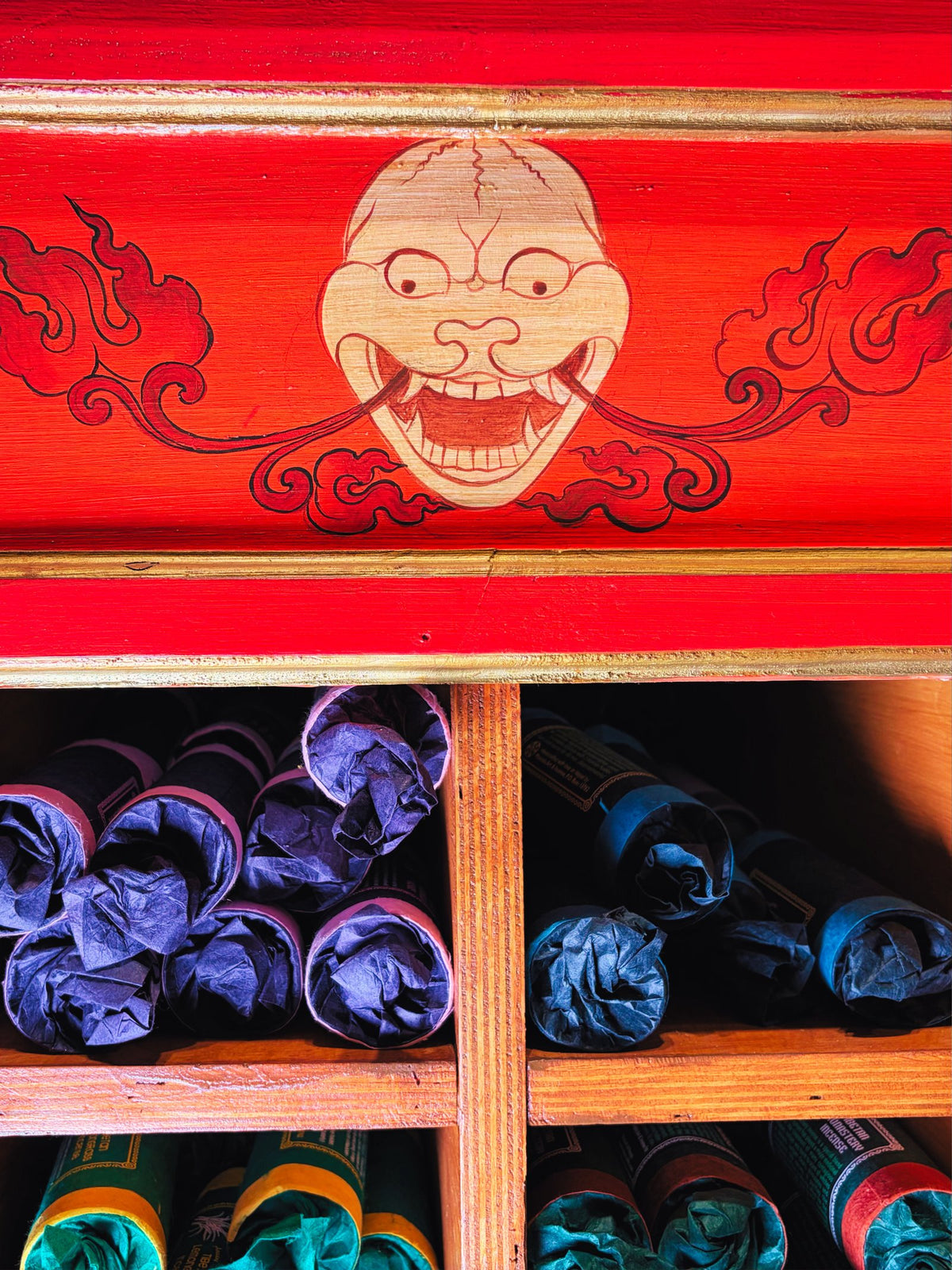
Finally, above the shelf with the incense sticks, a single skull between clouds – again not an image of horror, but a reminder of impermanence.
Works by Jamyang
We already offer one large work by Jamyang: a painted wooden door with two dragons and a jewel bowl, 250 × 99 cm. More works will follow. We are also planning an event with him at which he will demonstrate thangka painting live. We will announce the date here as soon as it is set.