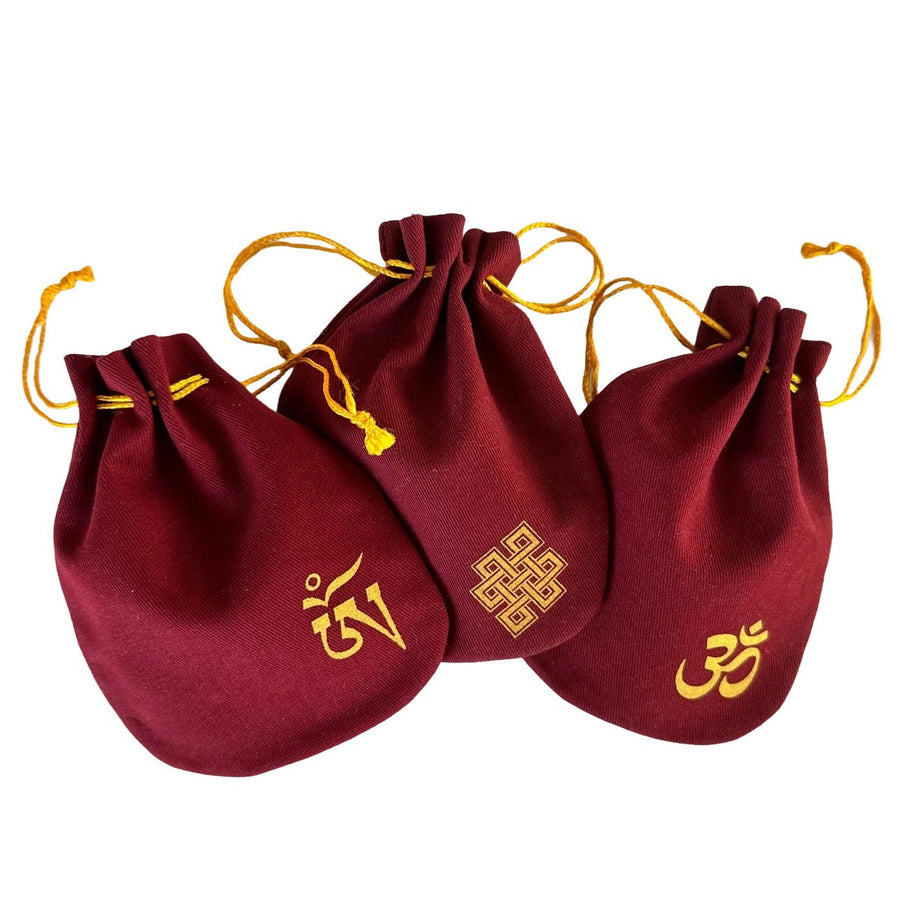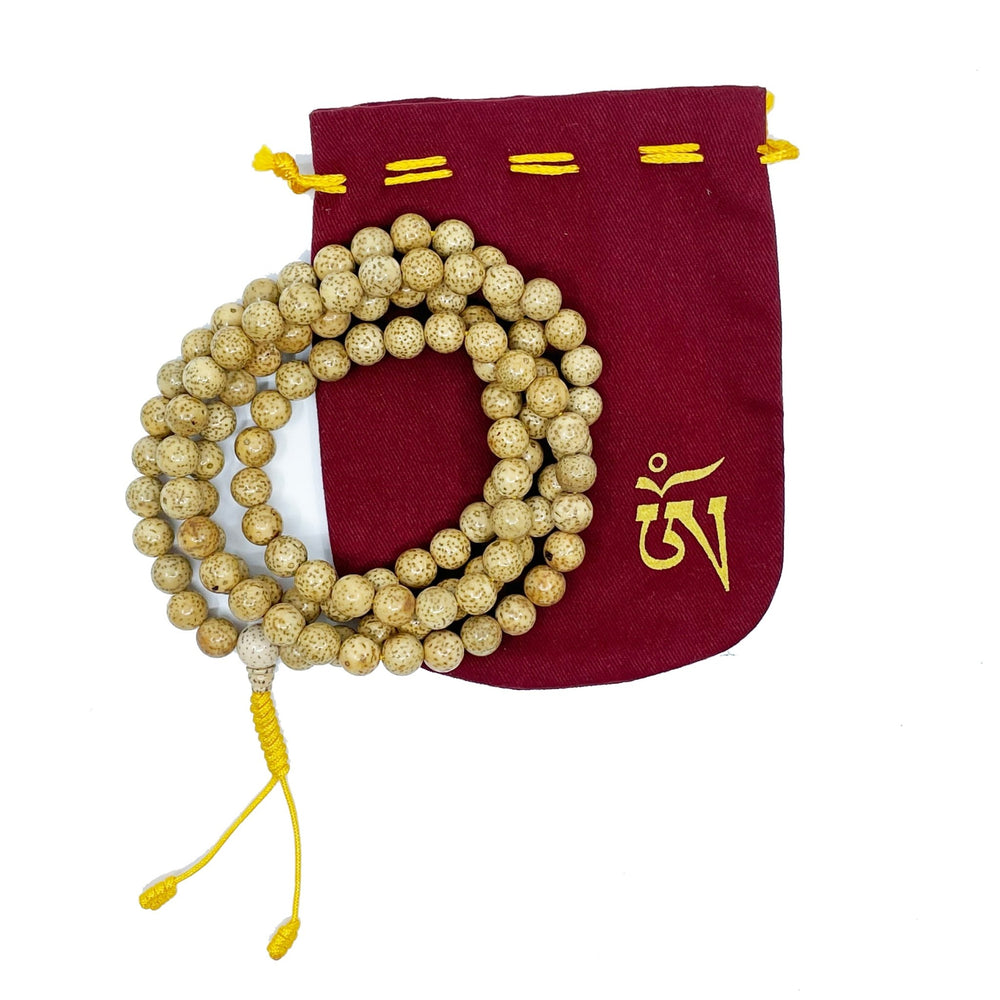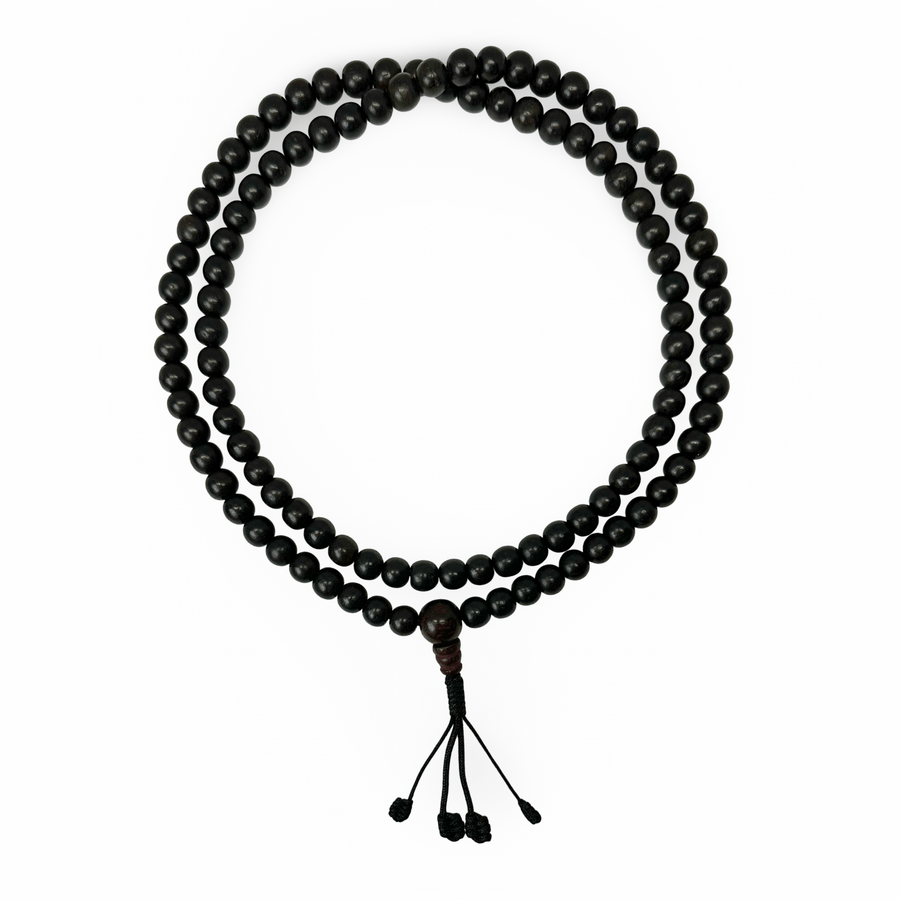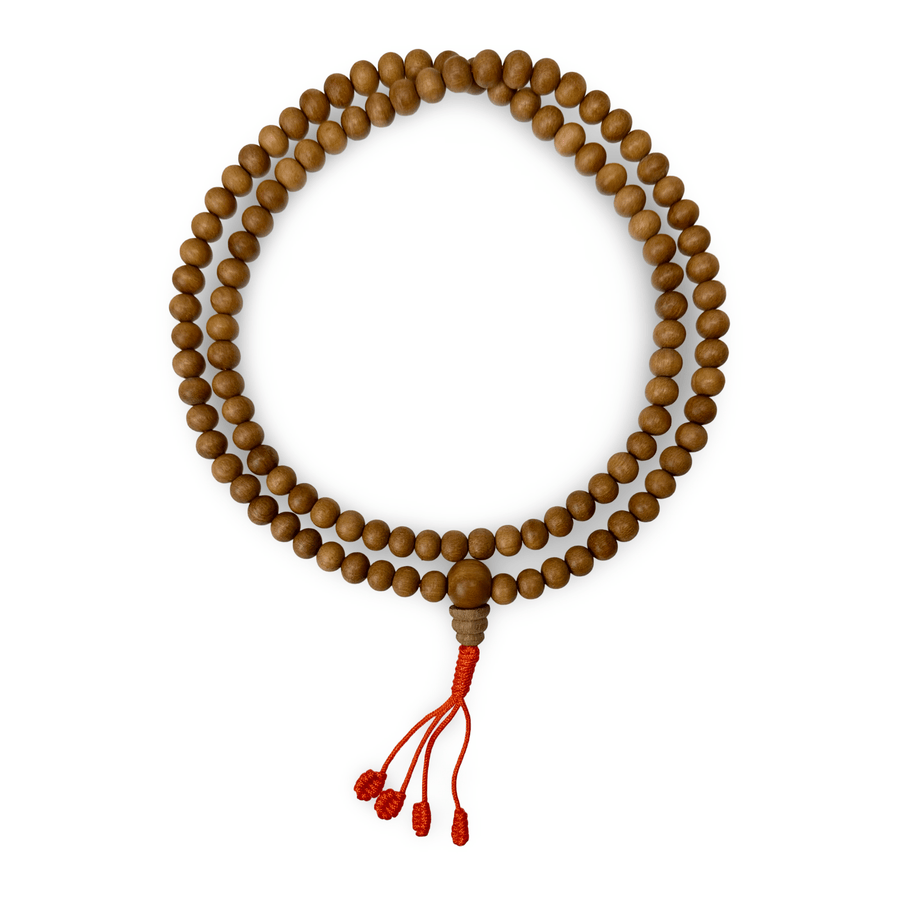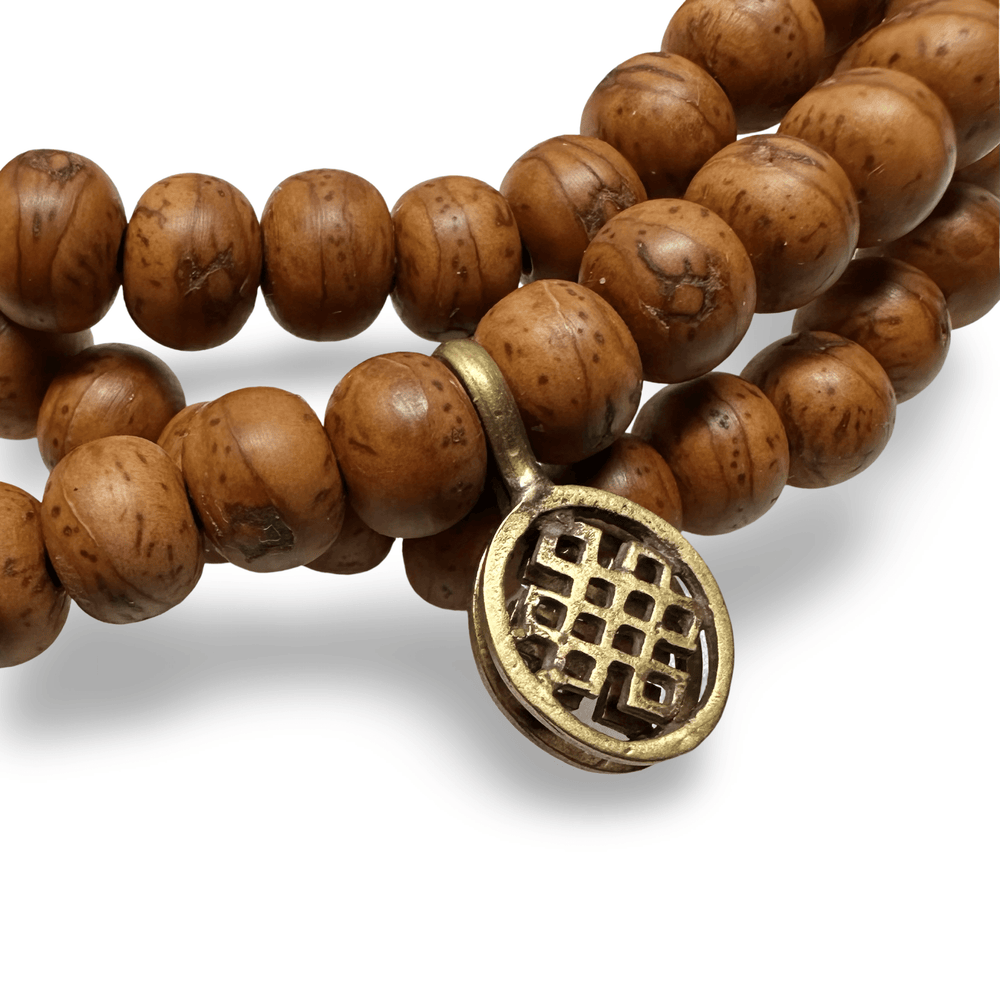



Powerful mala made from 108 hand-knotted ebony beads in rich black-brown with a matt, velvety surface. The guru bead is a large, elaborately chased silver ball with a surrounding heart decoration frieze and twisted rope band motif - handmade in the Newari silversmithing tradition of Nepal. The bright red silk thread with tassel provides an intense color accent and marks the traditional end of the mala. Can be worn as a long necklace or doubled. Handmade in the Atelier Tibet in Zurich.
Bead diameter approx. 10 mm · Circumference 100 cm · Available in two colors
Ebony is a deep black, particularly hard and dense wood obtained from trees of the Diospyros genus . It is prized for its durability, beauty and elegance.
In the mala tradition, the guru bead(sumeru) marks the beginning and end of a complete mantra cycle. It is not counted when reciting, but serves as an anchor point - as a reminder of teacher, practice and intention. An elaborately crafted silver guru bead like this also gives the mala the character of a piece of jewelry that goes far beyond everyday use
| age | Wrist circumference |
|
Newborn |
9 - 12 cm |
|
6 months - 3 years |
12 - 14 cm |
|
4 - 10 years |
14 - 15 cm |
|
Teenager, ladies (XS) |
15 - 16 cm |
|
Ladies (M) |
16 - 17 cm |
|
Ladies (XL) |
18 - 19 cm |
|
Men (M) |
18 - 20 cm |
|
Men (XL) |
21 - 22 cm |
| EU / CH | US size | UK size | Inner diameter (mm) | Inner circumference (mm) |
|---|---|---|---|---|
| 48 | 4.5 | I | 15.3 | 48.0 |
| 49 | 5 | J | 15.6 | 49.0 |
| 50 | 5.5 | J½ | 15.9 | 50.0 |
| 51 | 6 | K | 16.2 | 51.0 |
| 52 | 6.5 | L | 16.6 | 52.0 |
| 53 | 7 | M | 16.9 | 53.0 |
| 54 | 7.5 | N | 17.2 | 54.0 |
| 55 | 8 | O | 17.5 | 55.0 |
| 56 | 8.5 | P | 17.8 | 56.0 |
| 57 | 9 | P½ | 18.2 | 57.0 |
| 58 | 9.5 | Q | 18.5 | 58.0 |
| 59 | 10 | R | 18.9 | 59.0 |
| 60 | 10.5 | S | 19.2 | 60.0 |
| 61 | 11 | S½ | 19.6 | 61.0 |
| 62 | 11.5 | T | 19.8 | 62.0 |
| 63 | 12 | U | 20.3 | 63.0 |
| 64 | 12.5 | V | 20.6 | 64.0 |
| 65 | 13 | W | 20.9 | 65.0 |
| 66 | 13.5 | X | 21.3 | 66.0 |
| 67 | 14 | Y | 21.6 | 67.0 |
| 68 | 14.5 | Z | 21.8 | 68.0 |
| 69 | 15 | Z+1 | 22.1 | 69.0 |
| 70 | 15.5 | Z+2 | 22.5 | 70.0 |
Women:
Men:
Subscribe to our newsletter for product news, event tips and cultural information, and receive a 10% discount on your first order. You can unsubscribe at any time with just one click.