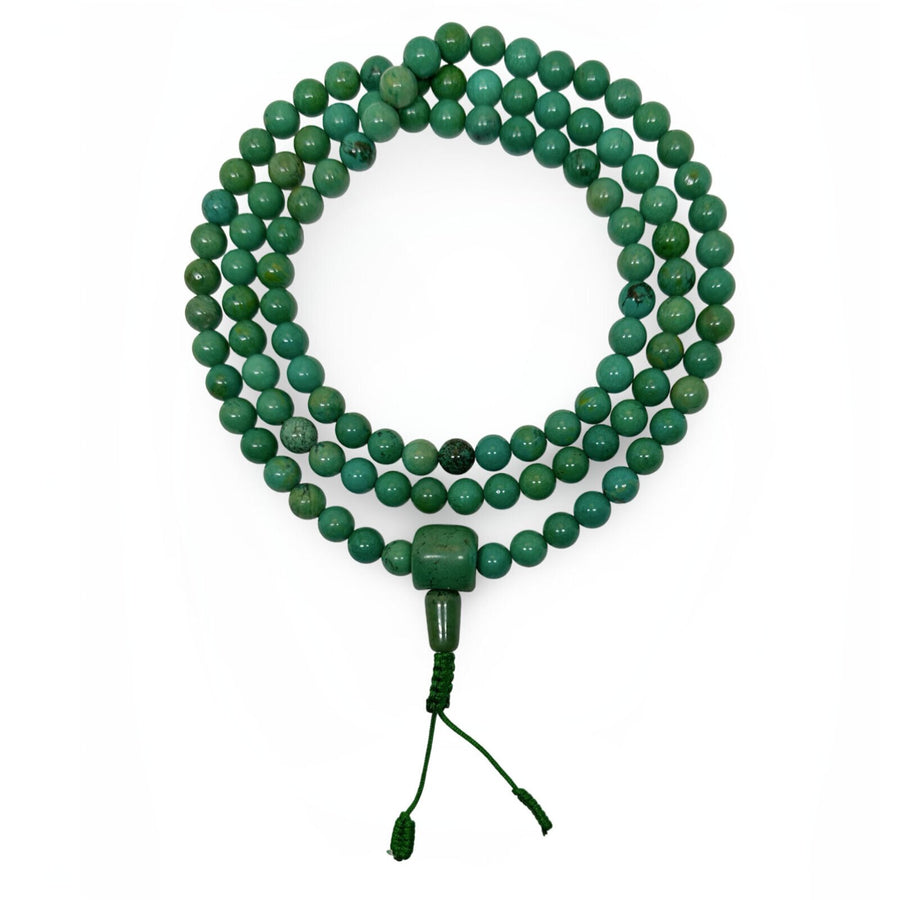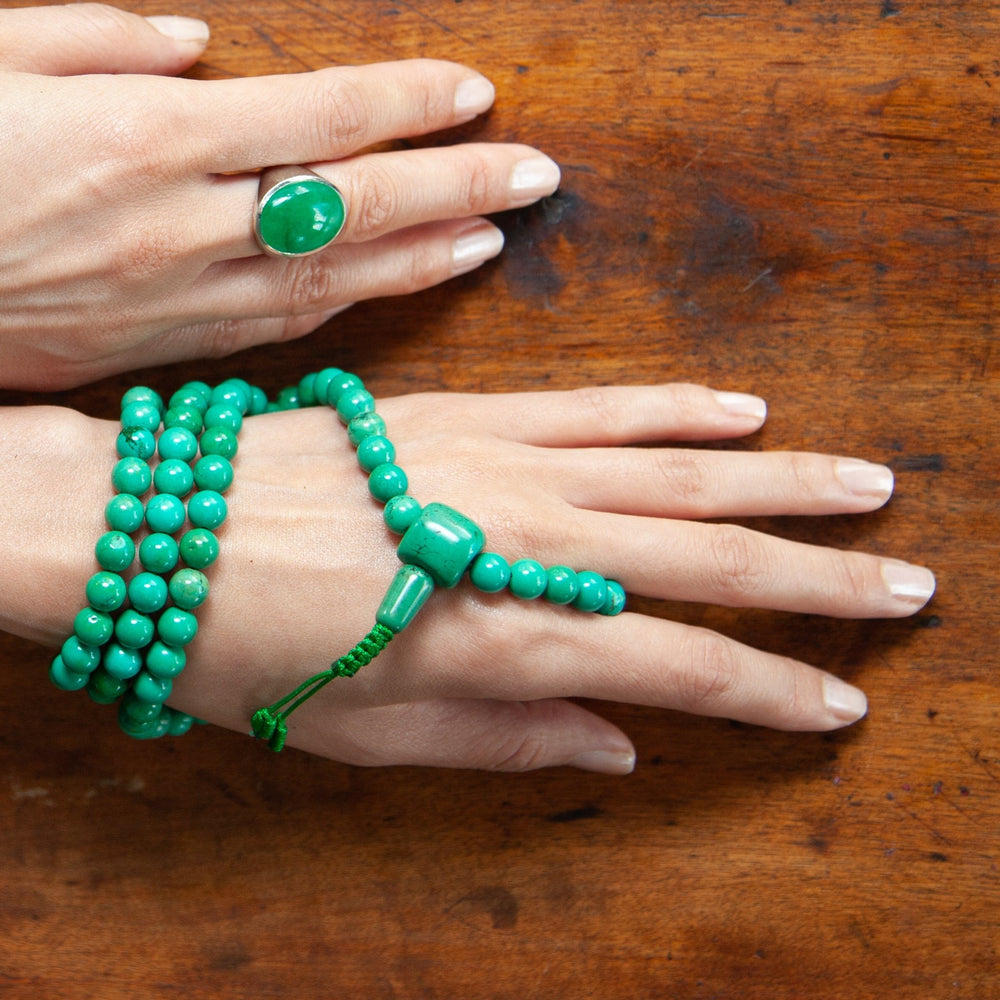

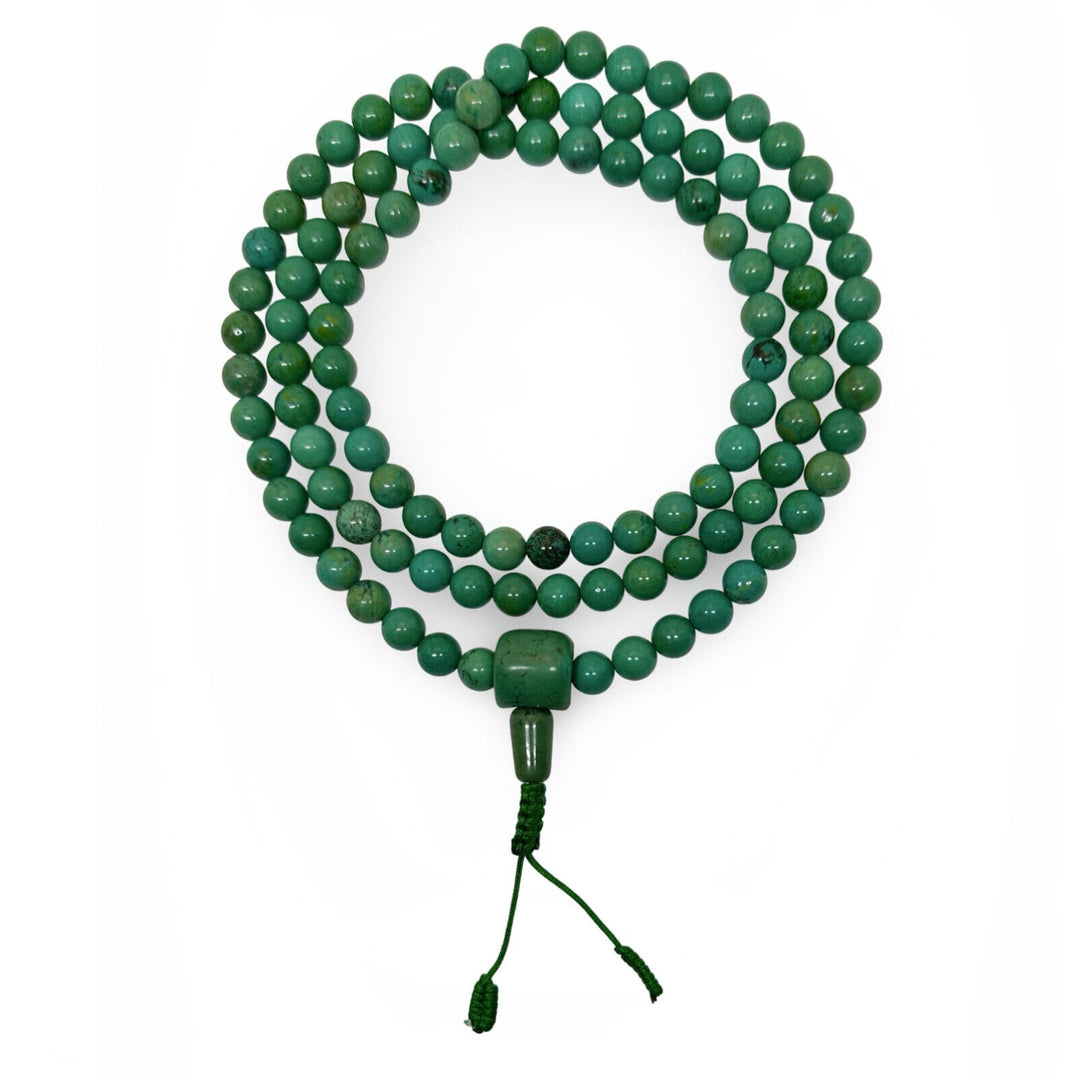
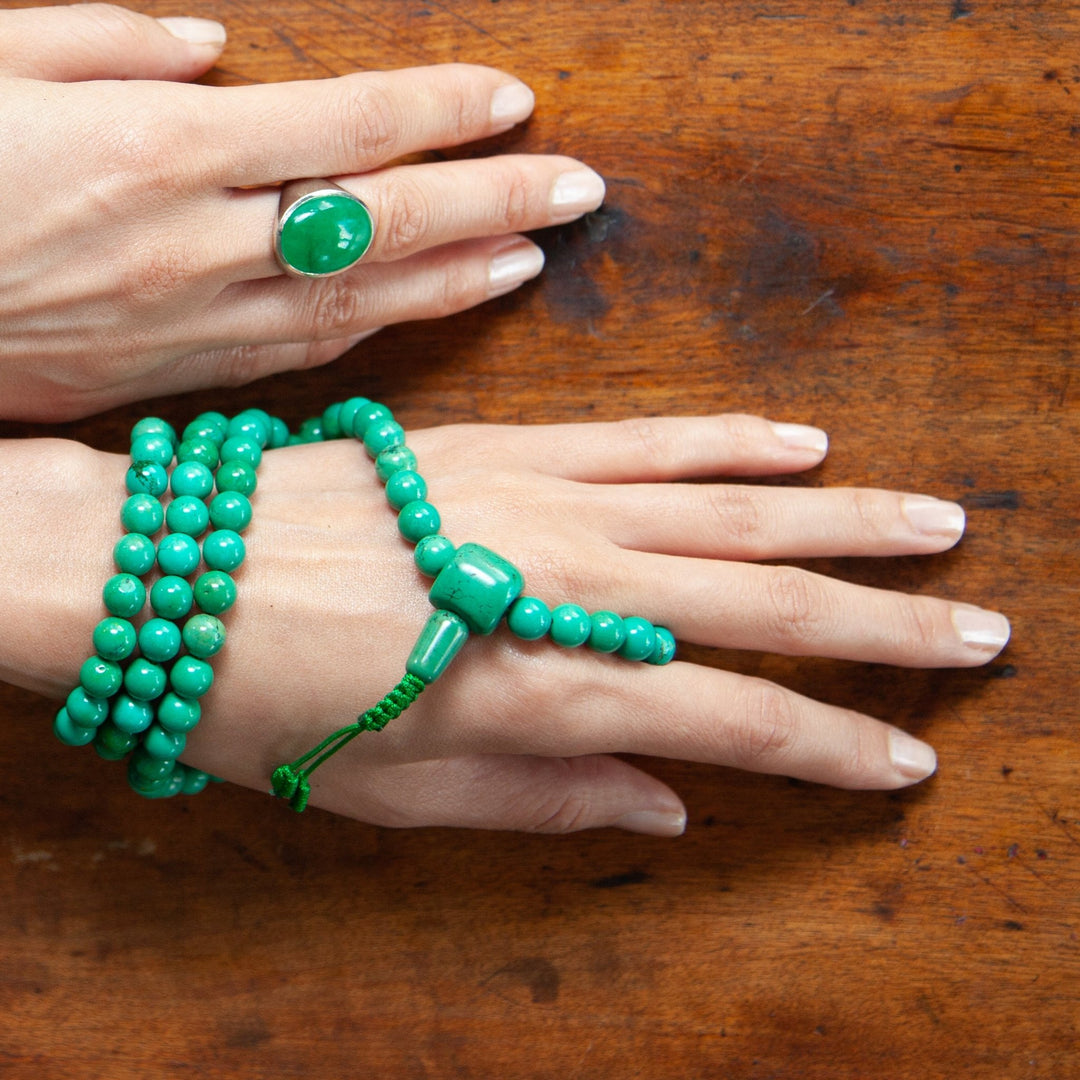


Tibetan turquoise mala
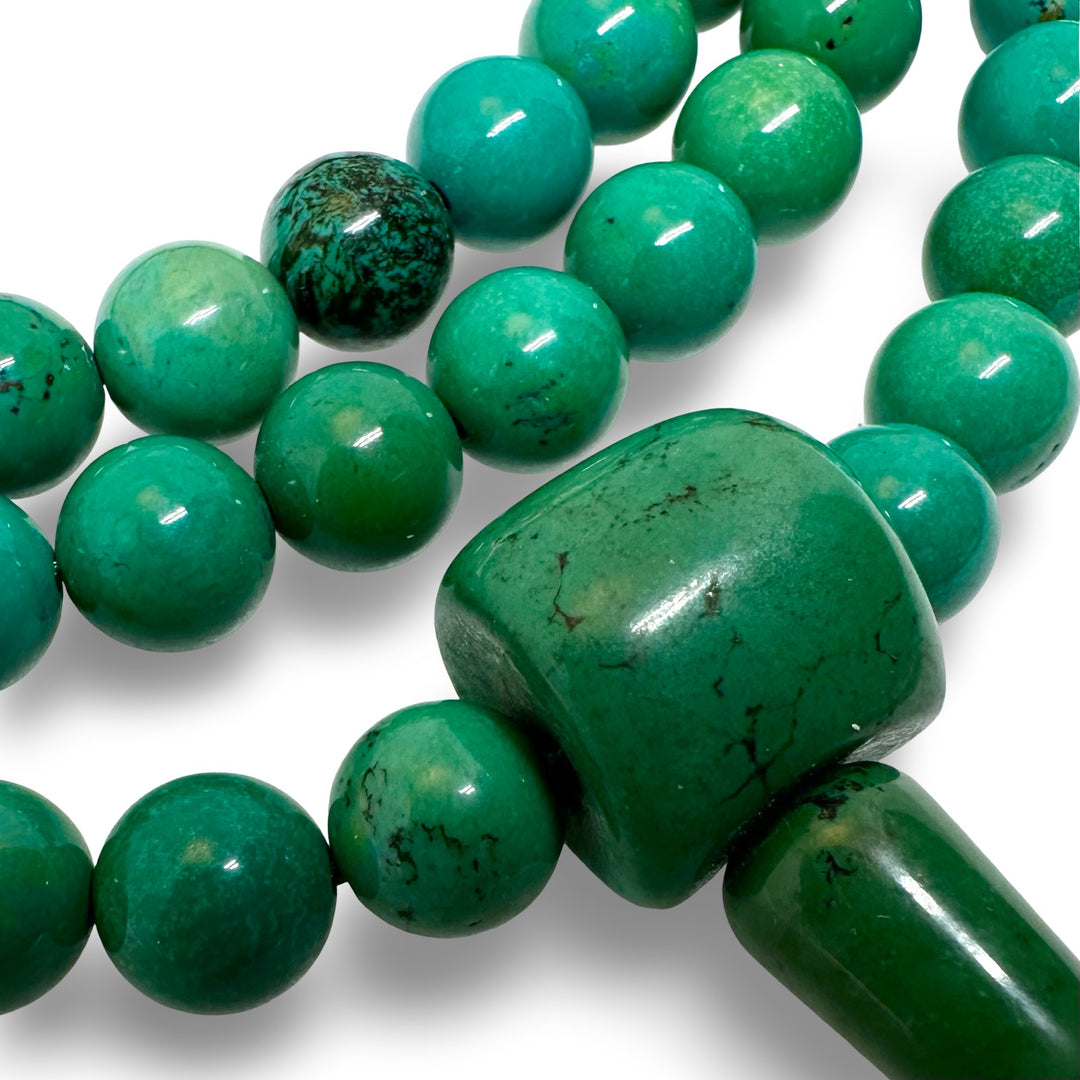
Hand-knotted mala with 108 carefully selected, polished beads of Tibetan turquoise, made with two green cords. The prayer chain is carefully handmade for us in a traditional workshop in Nepal and is available with either a cylindrical or spherical guru bead
Tibetan turquoise is a particularly prized gemstone from the Himalayan region. Its characteristic blue-green play of colors, often interspersed with natural brown or black veins, gives each stone a unique, vibrant texture. In Tibetan culture, turquoise has been considered a sacred protective stone and a symbol of luck, harmony and spiritual power for centuries. It is traditionally worn in amulets and ritual jewelry to strengthen positive energy and accompany the wearer on their spiritual path.
The 108 beads correspond to the traditional number of mantra repetitions in Buddhist practice and support calm and concentrated meditation.
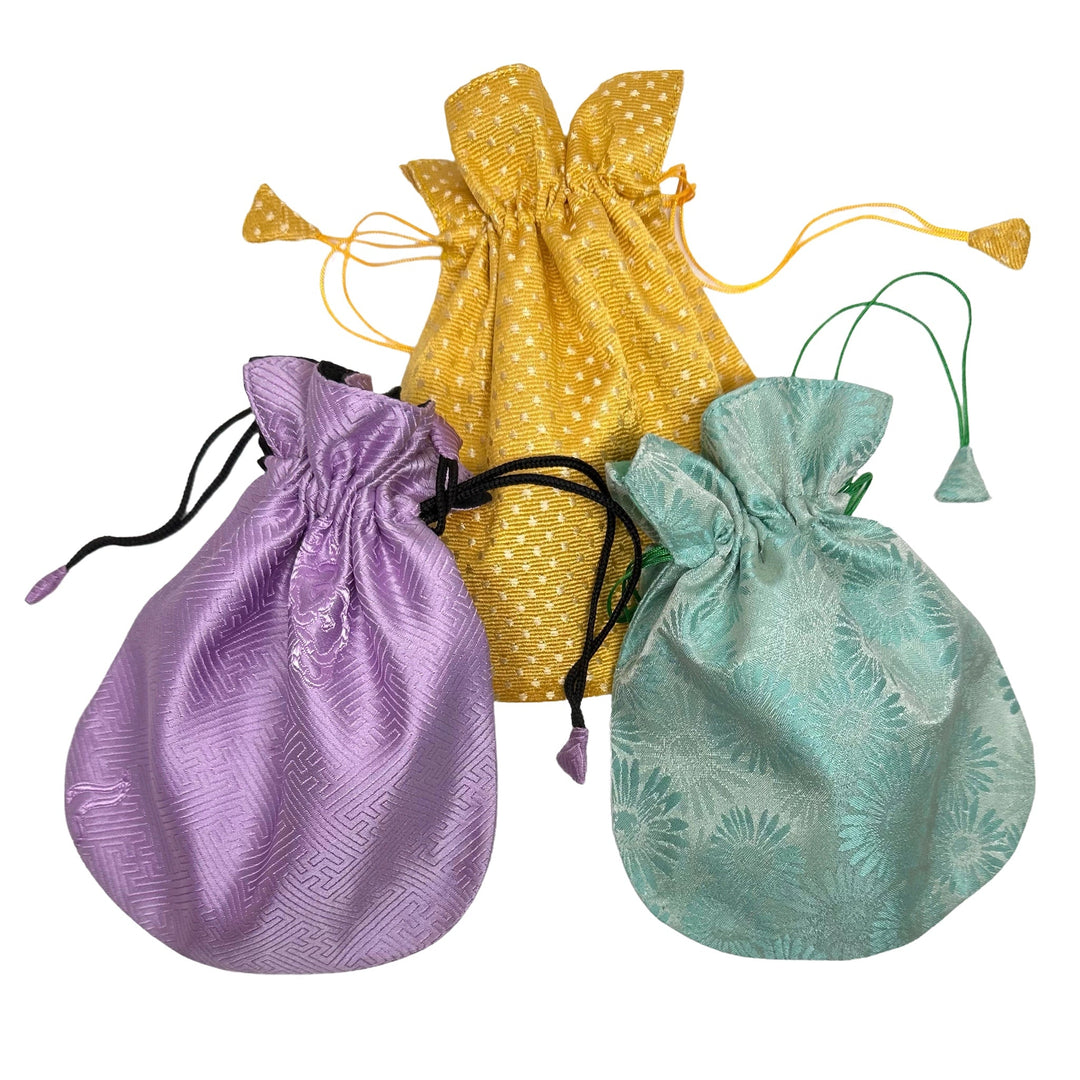
We supply the mala in an elegant silk brocade bag, which we select individually to match the color.
Details
-
Material: Tibetan turquoise
-
Mala circumference: approx. 88 cm
-
Diameter of the beads: approx. 8 mm
-
Origin: Nepal
Bracelets, bangles, bangles, necklaces
| age | Wrist circumference |
|
Newborn |
9 - 12 cm |
|
6 months - 3 years |
12 - 14 cm |
|
4 - 10 years |
14 - 15 cm |
|
Teenager, ladies (XS) |
15 - 16 cm |
|
Ladies (M) |
16 - 17 cm |
|
Ladies (XL) |
18 - 19 cm |
|
Men (M) |
18 - 20 cm |
|
Men (XL) |
21 - 22 cm |
The length of the bracelet may be 1 cm to 3 cm longer than the measured wrist circumference, depending on your taste.
Finger rings
Ring size conversion table
| EU / CH | US size | UK size | Inner diameter (mm) | Inner circumference (mm) |
|---|---|---|---|---|
| 48 | 4.5 | I | 15.3 | 48.0 |
| 49 | 5 | J | 15.6 | 49.0 |
| 50 | 5.5 | J½ | 15.9 | 50.0 |
| 51 | 6 | K | 16.2 | 51.0 |
| 52 | 6.5 | L | 16.6 | 52.0 |
| 53 | 7 | M | 16.9 | 53.0 |
| 54 | 7.5 | N | 17.2 | 54.0 |
| 55 | 8 | O | 17.5 | 55.0 |
| 56 | 8.5 | P | 17.8 | 56.0 |
| 57 | 9 | P½ | 18.2 | 57.0 |
| 58 | 9.5 | Q | 18.5 | 58.0 |
| 59 | 10 | R | 18.9 | 59.0 |
| 60 | 10.5 | S | 19.2 | 60.0 |
| 61 | 11 | S½ | 19.6 | 61.0 |
| 62 | 11.5 | T | 19.8 | 62.0 |
| 63 | 12 | U | 20.3 | 63.0 |
| 64 | 12.5 | V | 20.6 | 64.0 |
| 65 | 13 | W | 20.9 | 65.0 |
| 66 | 13.5 | X | 21.3 | 66.0 |
| 67 | 14 | Y | 21.6 | 67.0 |
| 68 | 14.5 | Z | 21.8 | 68.0 |
| 69 | 15 | Z+1 | 22.1 | 69.0 |
| 70 | 15.5 | Z+2 | 22.5 | 70.0 |
Size categories:
Women:
- Very small: 48-50 (children/very petite)
- Small: 51-53 (petite hands)
- Standard: 54-56 ← most common sizes
- Large: 57-59 (strong hands)
- Very large: 60-62
Men:
- Small: 57-59 (narrow hands)
- Standard: 60-63 ← most common sizes
- Large: 64-66 (strong hands)
- Very large: 67-70 (very strong hands)
Brief instructions for measuring ring size:
- Take a ring that fits well.
- Place it on a ruler and measure the inside diameter (from one inner edge to the other).
- Compare the diameter with the table to determine the ring size.
- Take a thin strip of paper or thread.
- Wrap it around the part of the finger where you want the ring to sit (not too tight).
- Mark the point where the ends meet.
- Measure the length of the strip in millimeters. This is the inner circumference.
- Find the right size in the table.
- Measure the finger size in the evening, as fingers swell slightly during the day.
- If you are between two sizes, choose the larger size.
- Make sure that the ring fits over the knuckle.