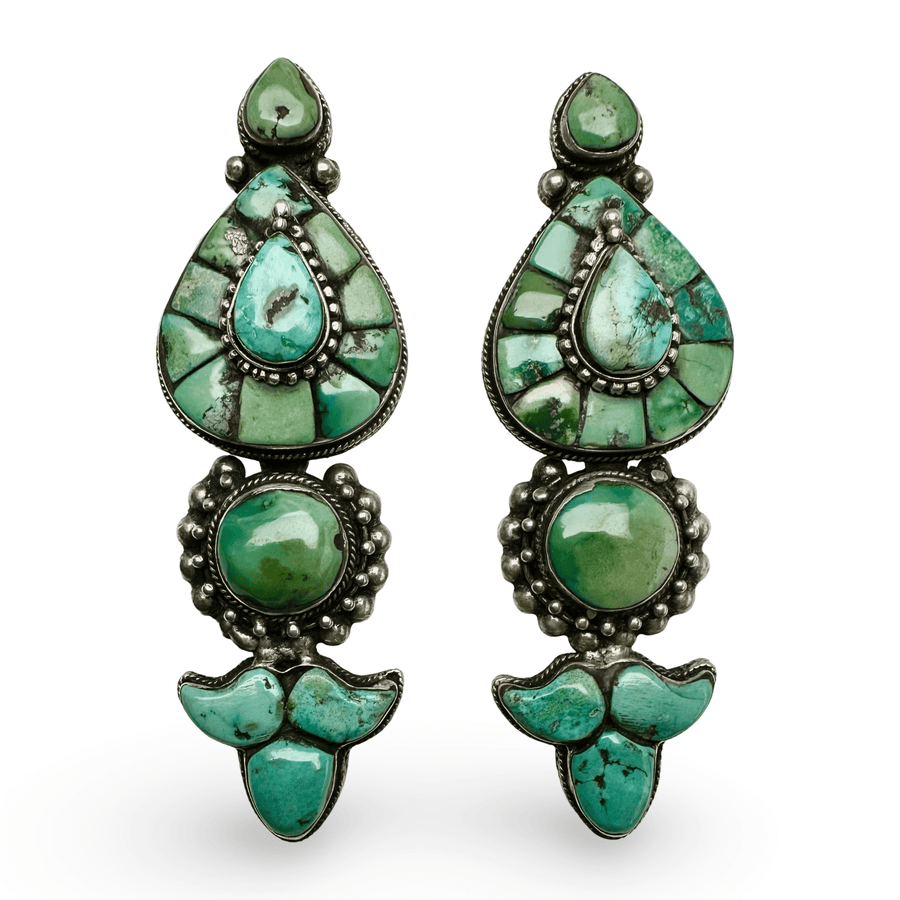

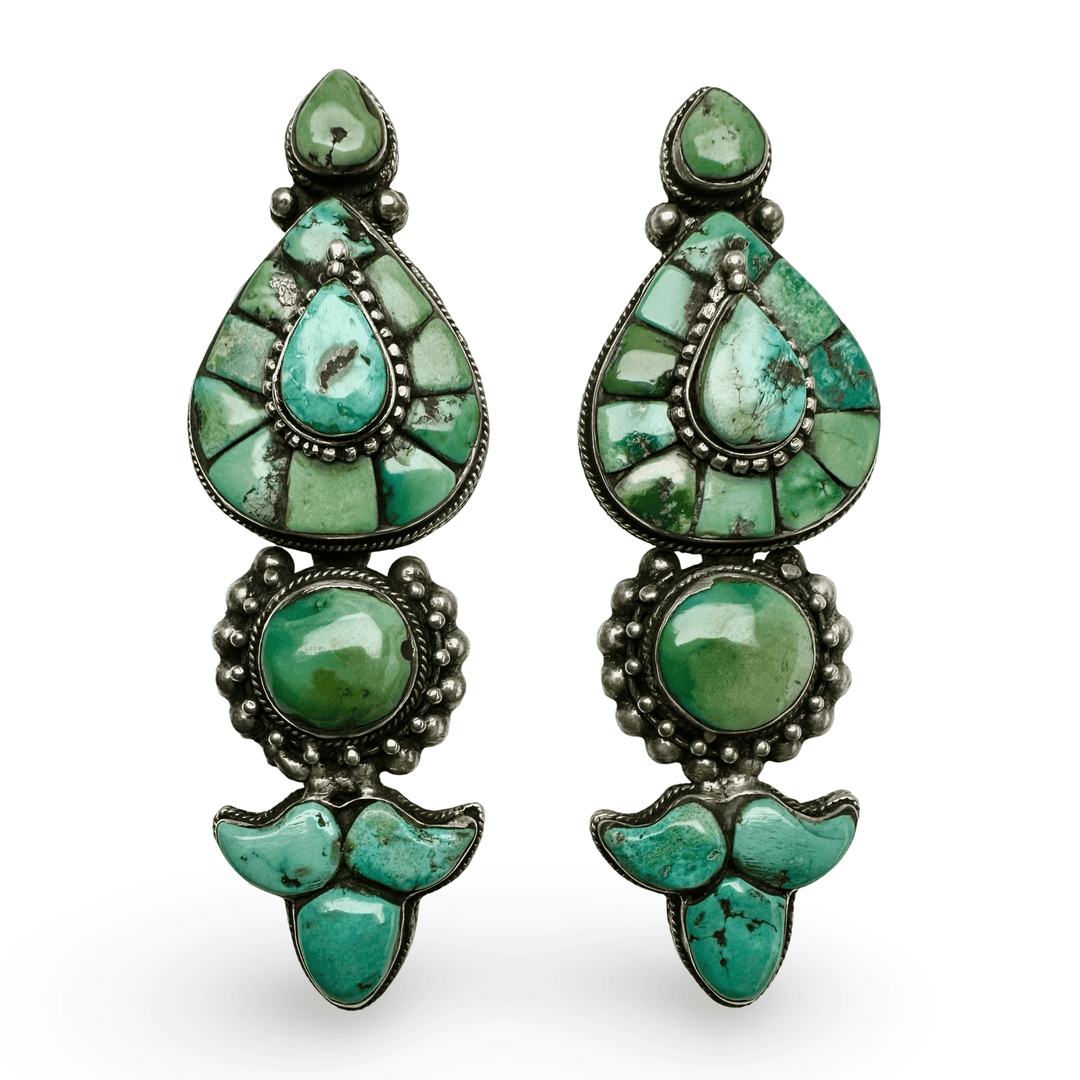

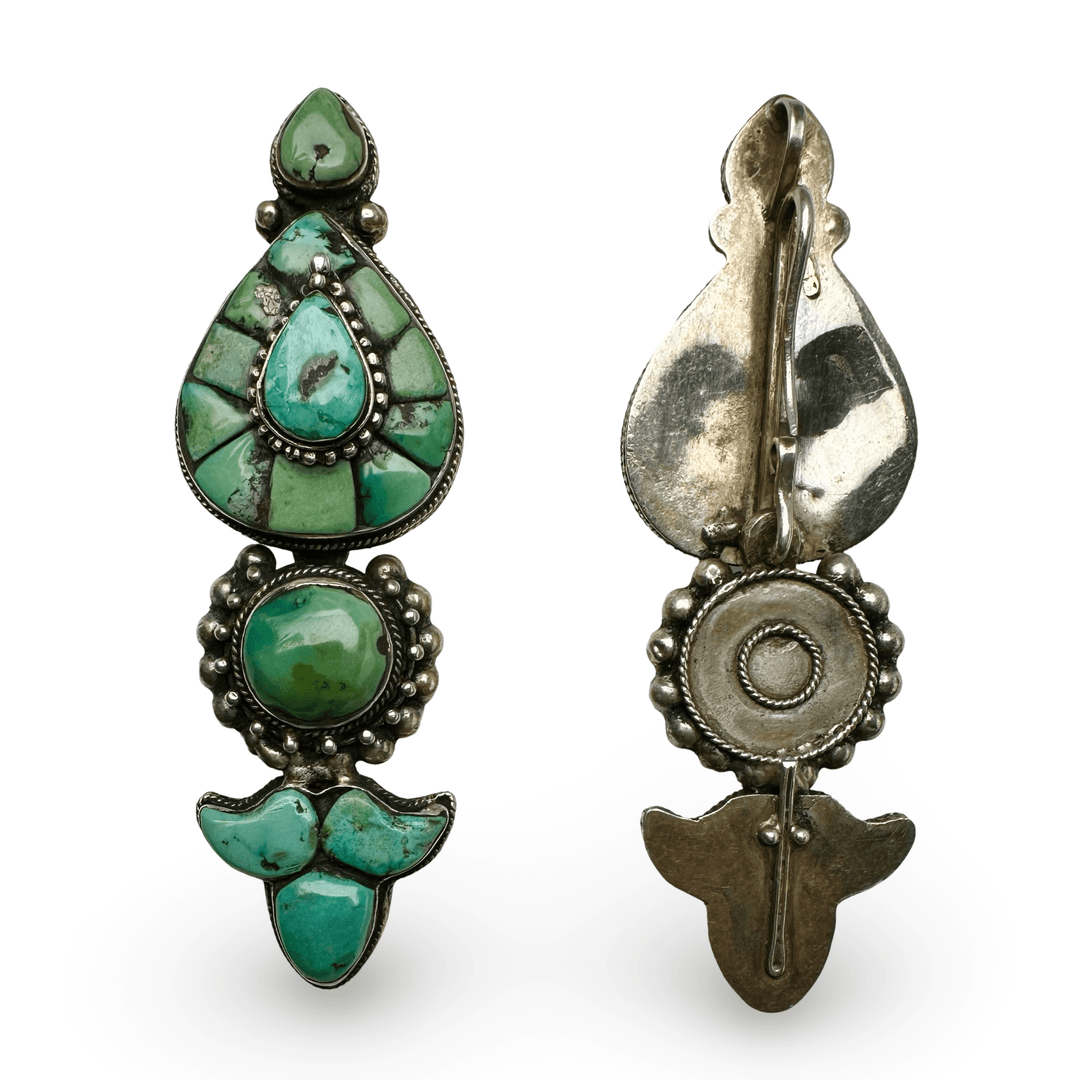
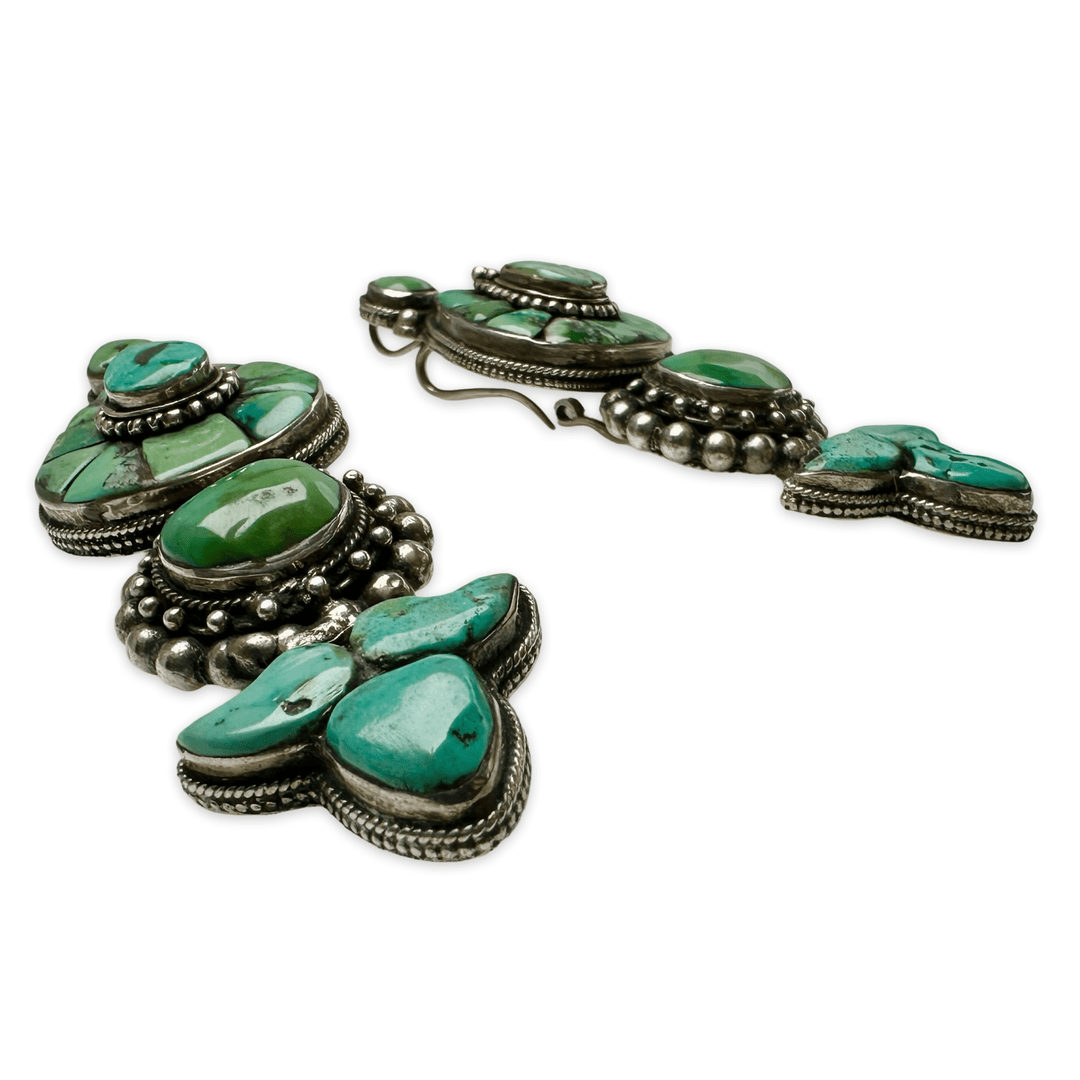
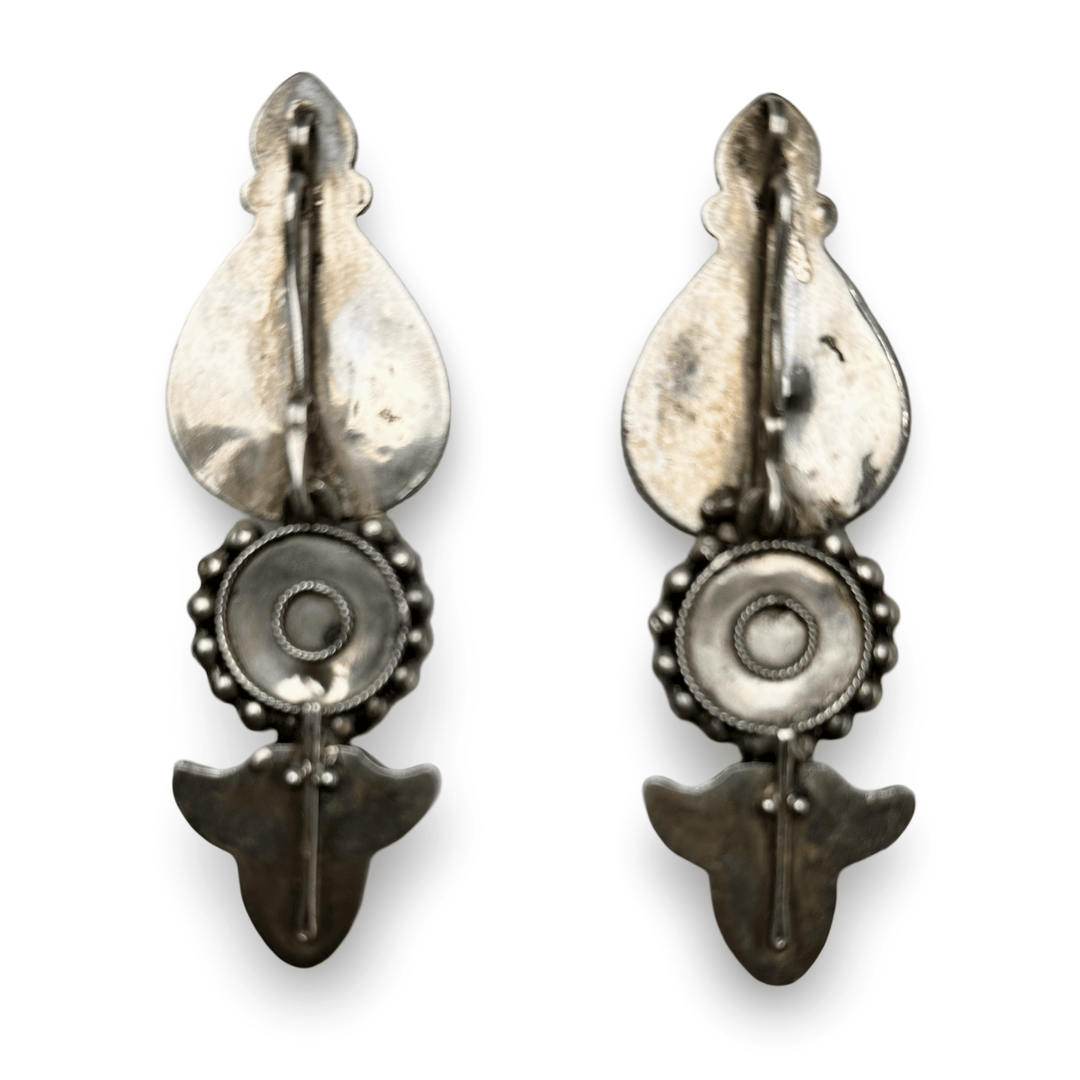
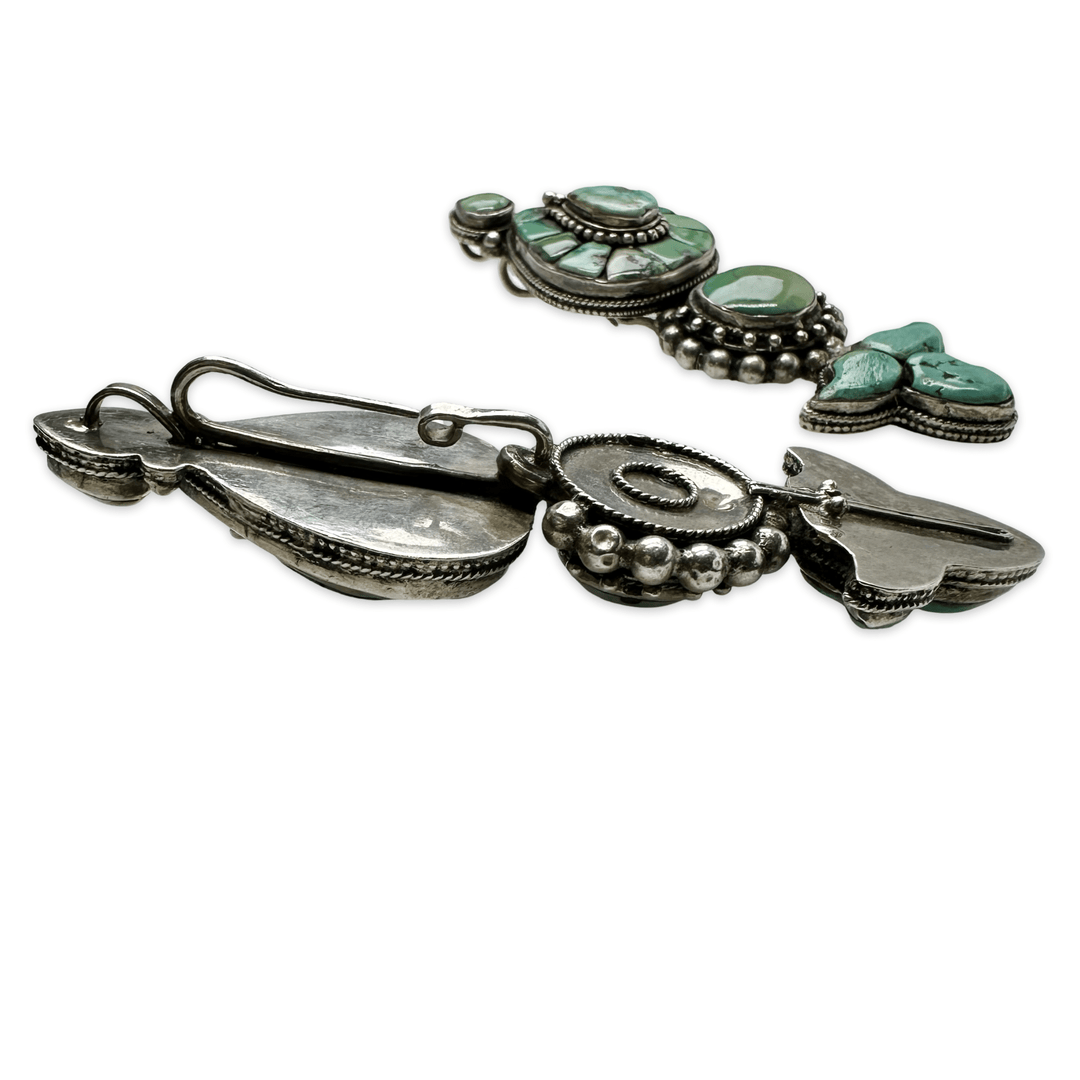


This pair of "Akor" ear ornaments with their typical ends in the shape of stylized lotus buds is set with flat turquoise cabochons set in silver. The settings are elaborately decorated with fine silver wires and applied silver spheres.
The pair comes from an extensive collection of Tibetan jewelry from the 19th and 20th centuries and has probably never been worn. Both the quality of the turquoise and the silver workmanship are of a high standard.
As such ear pendants were often too massive or heavy to be worn directly on the ears, they were instead fastened into headdresses - close to the ears to create the impression of earrings. This practice was particularly common among aristocratic women, with the jewelry facing forward to show off the inset stones.
They can also be worn as pendants on a necklace.
| age | Wrist circumference |
|
Newborn |
9 - 12 cm |
|
6 months - 3 years |
12 - 14 cm |
|
4 - 10 years |
14 - 15 cm |
|
Teenager, ladies (XS) |
15 - 16 cm |
|
Ladies (M) |
16 - 17 cm |
|
Ladies (XL) |
18 - 19 cm |
|
Men (M) |
18 - 20 cm |
|
Men (XL) |
21 - 22 cm |
| EU / CH | US size | UK size | Inner diameter (mm) | Inner circumference (mm) |
|---|---|---|---|---|
| 48 | 4.5 | I | 15.3 | 48.0 |
| 49 | 5 | J | 15.6 | 49.0 |
| 50 | 5.5 | J½ | 15.9 | 50.0 |
| 51 | 6 | K | 16.2 | 51.0 |
| 52 | 6.5 | L | 16.6 | 52.0 |
| 53 | 7 | M | 16.9 | 53.0 |
| 54 | 7.5 | N | 17.2 | 54.0 |
| 55 | 8 | O | 17.5 | 55.0 |
| 56 | 8.5 | P | 17.8 | 56.0 |
| 57 | 9 | P½ | 18.2 | 57.0 |
| 58 | 9.5 | Q | 18.5 | 58.0 |
| 59 | 10 | R | 18.9 | 59.0 |
| 60 | 10.5 | S | 19.2 | 60.0 |
| 61 | 11 | S½ | 19.6 | 61.0 |
| 62 | 11.5 | T | 19.8 | 62.0 |
| 63 | 12 | U | 20.3 | 63.0 |
| 64 | 12.5 | V | 20.6 | 64.0 |
| 65 | 13 | W | 20.9 | 65.0 |
| 66 | 13.5 | X | 21.3 | 66.0 |
| 67 | 14 | Y | 21.6 | 67.0 |
| 68 | 14.5 | Z | 21.8 | 68.0 |
| 69 | 15 | Z+1 | 22.1 | 69.0 |
| 70 | 15.5 | Z+2 | 22.5 | 70.0 |
Women:
Men:
Subscribe to our newsletter for product news, event tips and cultural information, and receive a 10% discount on your first order. You can unsubscribe at any time with just one click.